
Crossdocking Operations and warehousing have fully transitioned from supporting logistics functions into core strategic infrastructure. We operate in a supply chain environment defined by compressed lead times, real-time customer expectations, regulatory pressure, and constant cost optimization. Distribution performance now directly influences customer trust, operational resilience, and long-term profitability. As a result, cross docking and warehousing are engineered not for adequacy, but for precision, speed, safety, and scalability.
We approach warehousing as a living system, where physical design, digital intelligence, human performance, and risk control operate in continuous alignment. Every operational decision must support throughput without compromising safety or accuracy. When executed at a high level, modern cross docking and warehousing reduce friction across the supply chain and unlock sustained competitive advantage.
What is Crossdocking ? (Read our Article here)
Crossdocking is a logistics method where incoming freight is unloaded, sorted, and shipped out with little to no storage time. Instead of sitting on shelves, products flow directly from the receiving dock to outbound transportation.
Benefits of crossdocking:
- Faster delivery – Goods reach stores or customers within hours.
- Lower storage costs – Reduces the need for warehousing.
- Fewer handling steps – Less damage and labor.
- Improved inventory turnover – Products move quickly and efficiently.
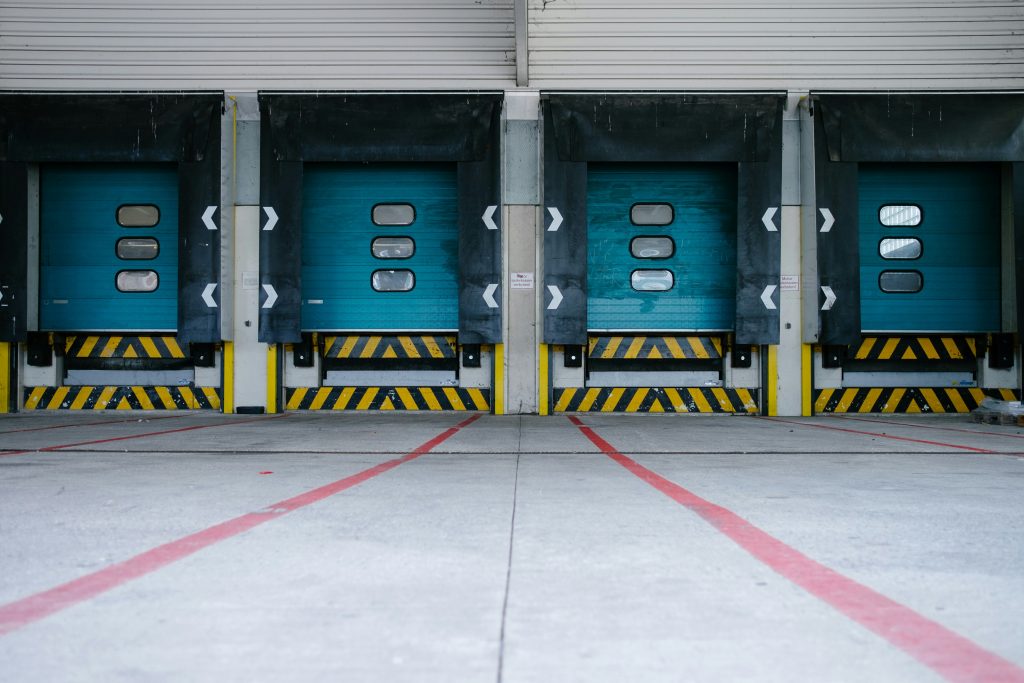
Crossdocking Operations as a Foundational Distribution Model
Crossdocking Operations in 2026 represents a shift away from inventory dependency toward movement-driven logistics. Rather than treating warehouses as storage buffers, we design them as flow-through environments where inbound freight is immediately transitioned to outbound channels. This model dramatically reduces holding costs, handling touches, and exposure to damage or obsolescence.
Modern crossdocking is defined by advance intelligence. Shipment-level data, transportation schedules, and demand signals are integrated before freight arrives at the facility. This allows operations teams to pre-plan dock assignments, labor sequencing, and outbound routing. Freight enters the building with a defined purpose and exits with minimal delay.
Crossdocking also plays a critical role in network resilience. During demand surges, transportation disruptions, or inventory imbalances, crossdock-enabled facilities provide the agility required to reposition freight quickly. This capability allows organizations to maintain service levels even under volatile conditions.
Warehouse Design Engineered for Predictable Flow
The physical environment of the warehouse remains one of the most influential drivers of performance. In 2026, effective warehouse design prioritizes predictability, visibility, and adaptability. We move beyond static layouts and embrace designs that support continuous movement without congestion or ambiguity.
Facilities optimized for crossdocking and high-throughput warehousing emphasize linear flow patterns. Inbound and outbound operations are clearly separated, reducing cross-traffic and minimizing decision points for operators. Staging areas are designed to support rapid classification and transfer, not long-term accumulation.
Visibility is a critical design principle. Open sightlines, elevated lighting standards, and intuitive spatial organization reduce cognitive strain on workers and improve situational awareness. When teams can see what is happening across the floor, they make faster and safer decisions.
Scalability is embedded into the architecture. Modular racking systems, adaptable staging zones, and expandable dock configurations allow facilities to evolve without structural disruption. This future-oriented approach ensures that capital investments remain relevant as volumes and service requirements change.
Safety Integrated as a System, Not a Policy
Safety in 2026 is no longer enforced through isolated rules or reactive measures. We embed safety into every layer of operational design, recognizing that safe environments are inherently more productive and resilient. Safety failures introduce hidden costs that erode performance over time.
Advanced dock safety systems prevent trailer movement during loading and unloading, eliminating one of the most common causes of serious incidents. Sensor-based technologies monitor equipment proximity and pedestrian movement, providing real-time alerts that reduce collision risk without slowing operations.
Beyond technology, safety culture is cultivated through accountability and clarity. Training programs emphasize hazard recognition, situational judgment, and ownership. When employees understand how safety supports their own efficiency and well-being, compliance becomes a natural outcome rather than an imposed requirement.
Digital Systems as the Operational Nervous System
In 2026, digital infrastructure serves as the central nervous system of Crossdocking Operations and warehousing operations. We deploy integrated platforms that provide visibility, coordination, and control across the entire facility in real time.
A modern Warehouse Management System (WMS) orchestrates inbound processing, outbound execution, and labor allocation. In crossdock environments, the WMS dynamically matches inbound freight to outbound demand, ensuring immediate movement without manual intervention. Exception handling is automated, allowing supervisors to resolve issues before they disrupt flow.
Yard Management Systems (YMS) extend control beyond the warehouse walls. Trailer movement, dock availability, and yard congestion are actively managed to align with internal execution. This synchronization prevents bottlenecks that can undermine even the most efficient internal processes.
Automation enhances consistency and safety when applied strategically. Conveyance systems, automated sortation, and robotic handling reduce repetitive manual tasks while preserving flexibility. In 2026, automation is deployed where it strengthens human performance rather than replacing it outright.
Labor Enablement as an Operational Multiplier
Labor remains the most complex variable in warehouse performance. We approach workforce strategy with the understanding that enablement drives productivity, not pressure alone. In 2026, successful operations invest in skill development, ergonomic design, and intelligent scheduling.
Cross-trained employees provide operational elasticity, allowing facilities to adapt to volume fluctuations without disruption. Workforce planning is aligned with freight patterns, ensuring adequate coverage during peaks while avoiding inefficiency during slower periods.
Ergonomic considerations are integrated into equipment selection and workstation design. Reduced physical strain supports sustained performance, lowers injury risk, and improves retention. Stable teams develop institutional knowledge that directly improves execution quality.
When employees operate in environments designed for clarity and safety, productivity increases organically. Labor becomes a strategic asset rather than a constraint.
Maintaining Accuracy in High Velocity Operations
High speed environments demand exceptional accuracy. We reject the false trade-off between velocity and precision, recognizing that errors introduce rework, delays, and customer dissatisfaction. Accuracy reinforces speed by eliminating friction.
Inbound freight is verified through digital identification, weight validation, and condition assessment. Exceptions are identified and resolved immediately, preventing downstream disruption. Outbound verification ensures alignment between physical freight and documentation, protecting service commitments.
These controls create confidence across the supply chain. Stakeholders rely on accurate execution to plan transportation, production, and fulfillment activities. Accuracy becomes a foundation for trust and scalability.
Sustainability as an Extension of Operational Discipline
Sustainability in 2026 is inseparable from operational excellence. Efficient operations naturally consume fewer resources and generate less waste. We integrate sustainability through design discipline and execution efficiency, not superficial initiatives.
Energy-efficient lighting systems, intelligent climate control, and optimized dock scheduling reduce consumption while lowering operating costs. Crossdocking reduces storage requirements and minimizes unnecessary freight handling, directly contributing to lower emissions.
Organizations that embed sustainability into crossdocking operations achieve regulatory readiness, cost efficiency, and reputational strength. Environmental responsibility becomes a reflection of operational maturity.
Risk Management and Compliance Readiness
Regulatory complexity continues to increase across industries. We design operations that remain audit-ready at all times, reducing the risk of disruption or enforcement action. Standardized procedures, digital documentation, and transparent workflows ensure consistent compliance.
Risk management extends beyond regulation. Facilities prepared for labor shortages, equipment failure, or transportation disruptions recover faster and maintain service continuity. Contingency planning is integrated into daily operations rather than treated as an emergency response.
Data-Driven Continuous Improvement
High-performing crossdocking and warehousing operations evolve continuously. We rely on performance intelligence to guide optimization efforts without destabilizing execution. Metrics such as cycle time, cost per unit, safety incidents, and service reliability provide actionable insight.
Continuous improvement is approached methodically. Changes are tested, measured, and validated before scaling. This disciplined approach ensures that optimization enhances performance rather than introducing volatility.
Preparing Facilities for Future Demand Models
The logistics environment of 2026 demands adaptability. We design facilities capable of supporting omnichannel fulfillment, demand volatility, and service diversification. Modular layouts, scalable technology platforms, and flexible labor models ensure long-term relevance.
Future-ready operations outperform rigid infrastructures by absorbing change without disruption. Flexibility becomes a defining characteristic of operational excellence.
Crossdocking and Warehousing as Strategic Infrastructure
In 2026, crossdocking and warehousing excellence is defined by precision, resilience, and confidence. We build operations that move freight efficiently, protect people and product, and scale without friction. By integrating facility design, safety systems, digital intelligence, labor enablement, and continuous improvement into a unified framework, organizations transform logistics from a cost center into a strategic advantage.
Operational excellence is not optional. It is the foundation upon which competitive supply chains are built.